Most Paramount pet owners blame the dog park when fleas show up. More often, the fleas were already home: eggs and larvae sitting in the shaded soil under a patio or a tree, waiting for a warm body to walk past. Paramount's mild winters never fully stop the flea cycle, so yards here can breed fleas almost year-round. Here is how the cycle works, what actually breaks it, and when treating the yard itself is the missing step.
Why Paramount Yards Grow Fleas
Flea eggs do not stay on the dog. They roll off into whatever the dog walks and sleeps on, and outdoors they collect in very specific places:
- Shaded soil under patios, decks, trees and dense shrubs, where the sun never dries the ground
- The strip along fence lines, where opossums, raccoons and neighbourhood cats pass at night and drop eggs as they go
- Sandy patches and dog runs where pets rest in the heat of the day
- Anywhere irrigation keeps the soil slightly damp through summer
Because Paramount stays warm most of the year, the cycle slows in winter but rarely stops outright. A yard can look fine in January and be seeding fleas by March.
The Flea Cycle, and Why One Treatment Rarely Ends It
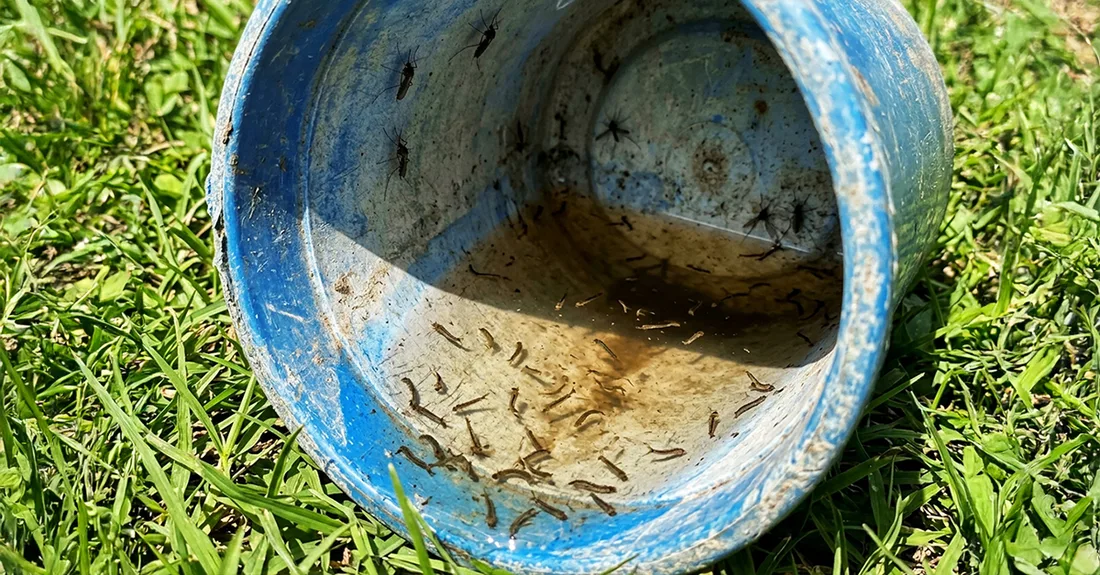
For every flea you can see on your dog, roughly 95 more are in the environment as eggs, larvae and pupae. The pupae are the problem stage. A flea can wait inside its cocoon for weeks, protected from sprays, and hatch the moment it feels vibration and carbon dioxide: a pet, or a person, walking past.
That is why fleas seem to come back two weeks after a treatment. They are not new fleas moving in; they are the hatch that was already sitting in your soil and carpet. Breaking the cycle takes six to eight weeks of steady pressure, and a follow-up treatment timed to that hatch window is what actually finishes the job.
Ticks in Paramount: The Real Risk
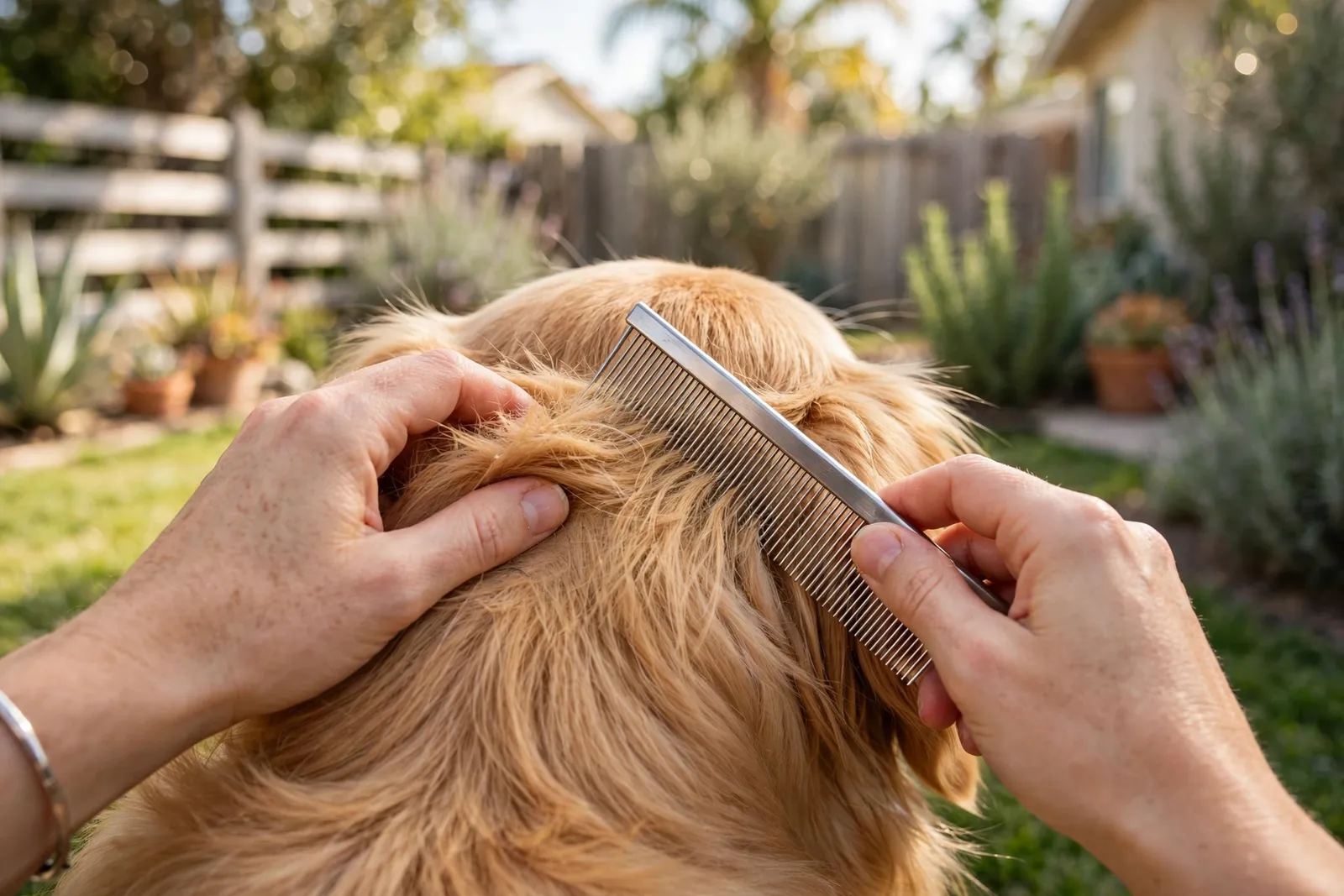
Ticks are less common than fleas here, but they are not rare. Brown dog ticks and American dog ticks wait along fence lines, in tall grass and leaf litter, and dogs pick them up on walks near the Los Angeles River corridor, Paramount Park and the Ralph C. Dills Park trails. Check ears, armpits, the belly and between the toes after walks, and run a flea comb through the coat: it catches ticks before they attach as well.
To remove an attached tick, grip it with fine tweezers close to the skin and pull straight up with steady pressure, then clean the spot. Lyme disease is rare in Los Angeles County; the bigger local concern is ehrlichiosis, sometimes called tick fever, in dogs. If a ticked dog goes off its food or turns lethargic in the following weeks, that is a vet visit, not a wait-and-see.
What to Do Before a Yard or Home Treatment
- Wash pet bedding, blankets and soft toys in hot water, weekly during an outbreak
- Vacuum carpets, sofas and pet corners daily and empty the canister outside. The vibration also triggers pupae to hatch into the treatment instead of after it
- Mow the lawn, rake out leaf litter and clear the shaded soil line along fences
- Start or restart a vet-approved flea prevention on every pet the same week. One untreated pet reseeds the whole yard
Pair that prep with a Residential Pest Control visit and the cycle breaks instead of dragging on for months. If you are weighing up products around pets and kids, our guide to pet-safe pest control explains what gets used and the re-entry times to expect.
When a Yard Treatment Is the Right Call
Treat the yard itself when fleas keep appearing even though every pet is on prevention, when ankles are getting bitten indoors, when a new puppy or kitten is about to come home, or when a rental is turning over between tenants. The quick home test: walk the shaded parts of the yard in white socks. If fleas are breeding out there, they will jump on within a minute.
Our Flea and Tick Control service treats the shaded breeding zones rather than just wetting the lawn, and the follow-up visit is booked for the hatch window before we leave. Call (888) 555-0199 and we will check the yard and the home together, so the cycle ends in one program instead of three separate battles.
Common Questions
Can my yard have fleas if I do not own a pet?
Yes. Opossums, raccoons and neighbourhood cats carry fleas and drop eggs wherever they rest. A pet-free yard can still seed an infestation the day a puppy comes home, which is why a quick yard check before bringing one home is worth it.
How long until the fleas are gone after treatment?
Most homes see a big drop within days, but full control takes about six to eight weeks because dormant pupae keep hatching on their own schedule. The follow-up visit, plus daily vacuuming during that window, is what ends it for good.
Is a yard treatment safe for my dog and kids?
Yes, when it is applied to the breeding zones and left to dry fully before anyone goes back out, usually within a few hours. We will give you the exact re-entry time for your yard before we leave.