A restaurant kitchen and a family kitchen can sit on the same street in Paramount and face completely different pest problems. The restaurant runs warm and damp sixteen hours a day, takes deliveries every morning, and stores food at a scale no home ever does. Add a health inspector who can walk in unannounced, and pest control stops being a household chore and becomes part of running the business. Here is how a commercial program actually works in Paramount, what it should include, and what to expect on every visit.
Why Restaurants and Food Businesses Are Different
Three things make a food business harder to keep pest-free than a home. First, the kitchen never fully cools down, so roaches, drain flies and stored-product pests can breed all year instead of slowing in winter. Second, every delivery is a chance for a hitchhiker: a case of produce or a pallet of dry goods can carry German roaches or pantry pests straight into the storeroom. Third, the stakes are public. A single roach sighting during a busy lunch service, or a poor health inspection score posted online, costs far more than any treatment program.
That is why the small taquerias and bakeries along Paramount Boulevard and the family restaurants in Downtown Paramount treat pest control as a standing appointment, not a one-off call. The goal is not just to kill what is there today, it is to keep the kitchen inspection-ready every single day.
German Roaches: The Commercial Problem That Spreads Unit to Unit
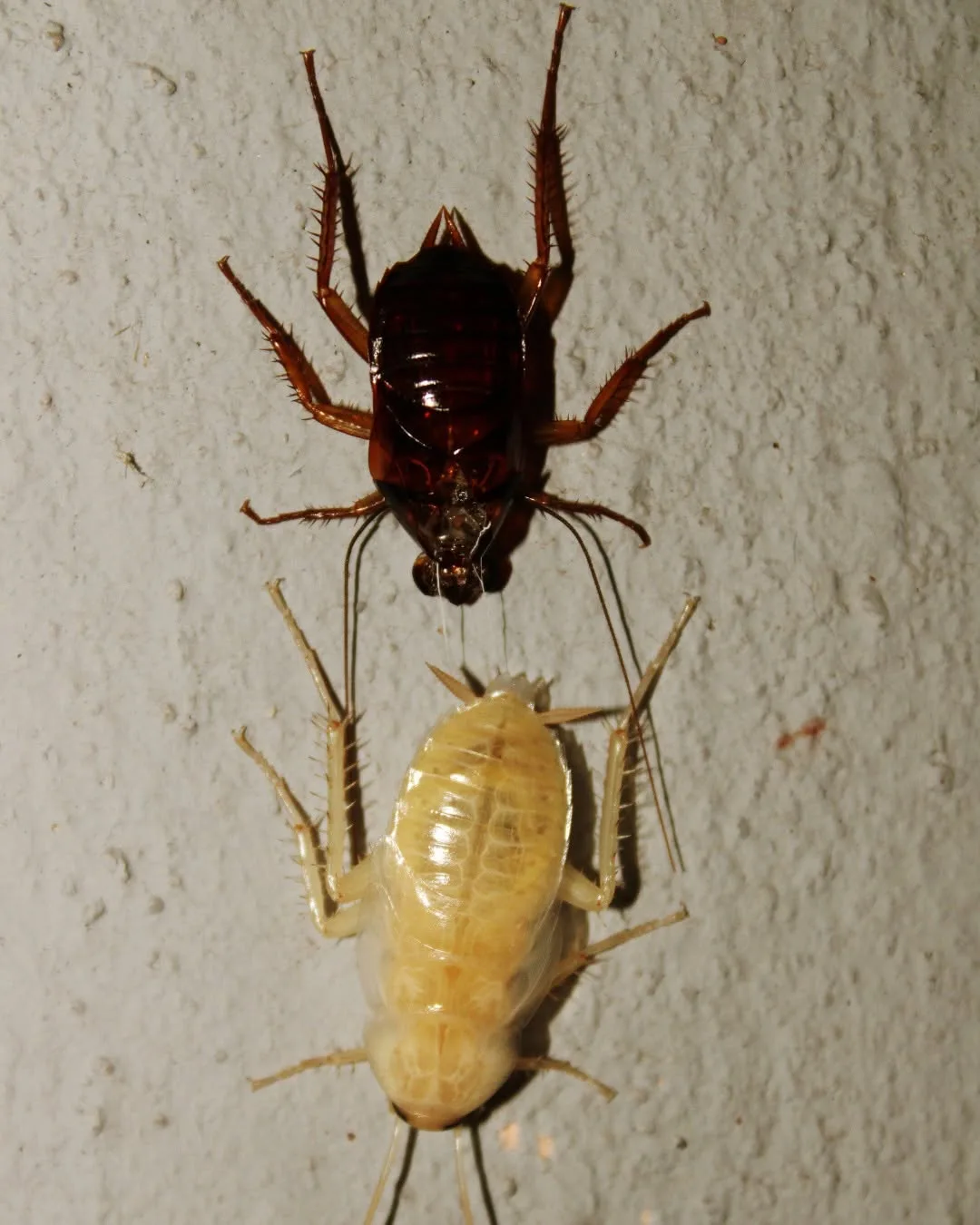
German cockroaches are the number one commercial pest in Paramount, and they are the reason a single spray never works. They hide in the warm voids behind ovens, under prep tables, inside wall outlets and in the motors of refrigeration units, places a general spray never reaches. A repellent spray in a kitchen only pushes them deeper into those voids, and in a multi-unit building or a shared-wall strip mall, the scatter from one unit can seed the unit next door.
The fix is a per-unit program built on baiting and monitoring, not spraying. Gel baits placed in the cracks roaches actually travel, sticky monitors that show whether the population is shrinking, and follow-up visits timed to the egg hatch. That is the core of our Cockroach Control service, and it is the same approach our guide to German cockroaches in apartments describes for multi-unit housing. One infested unit in a building is a building problem, and the program has to treat it that way.
Health Inspection Readiness: What Inspectors Look For
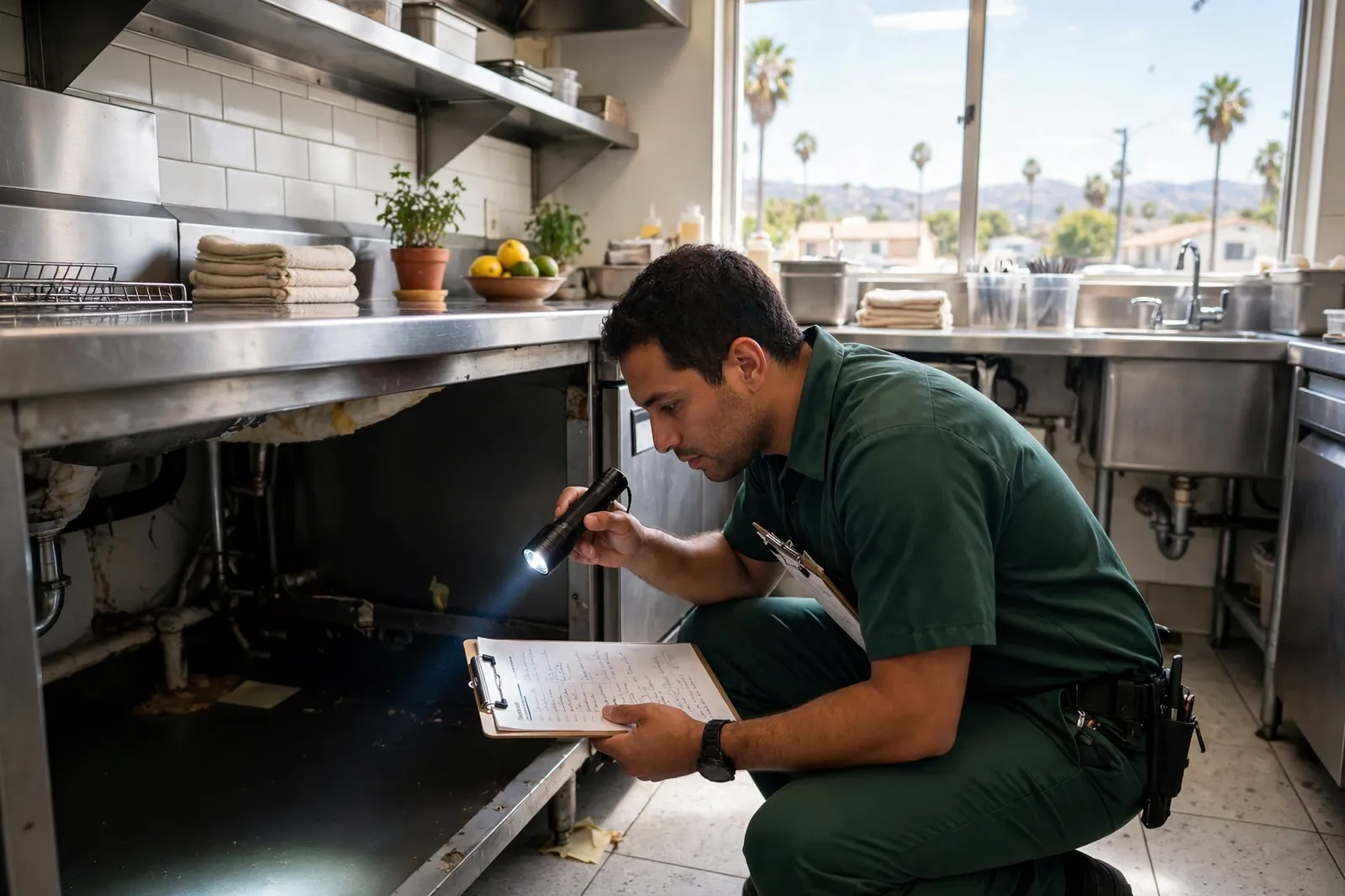
Los Angeles County health inspectors check for live pests, droppings, nesting material and the conditions that invite them: standing water, gaps around pipes, unsealed food, cluttered storerooms. They also ask to see your pest control records. A business with dated service reports, a list of what was treated and what was found, and a named provider it can call, is in a far stronger position than one that cannot produce a single record.
The simplest way to stay ready is to fix the small things between visits. Seal the gaps where pipes pass through walls, keep dry goods in lidded containers off the floor, empty the mop sink and grease traps on schedule, and keep the area behind the line clear enough that a technician can actually reach the walls. An inspector who sees a clean, documented kitchen and a current service log rarely has much to write up.
Discreet Scheduling and Documentation
Nobody wants a pest control visit during the lunch rush. Commercial visits are scheduled before opening or after closing, and the work is done quietly, in uniform, with no disruption to staff or customers. For offices, warehouses and retail shops, the same applies: early morning or after hours, with the treatment zones marked and the re-entry time given in writing before we leave.
After every visit you get a service report: what was inspected, what was found, what was treated, and what to watch for before the next visit. Keep those reports in one folder. They are your proof of a working program if an inspector asks, and they are the record that lets us spot a trend, like roach activity creeping back in the same unit, before it becomes a problem.
What a Commercial Program Should Include
A serious commercial program is a schedule, not a single visit. It starts with a full inspection of the kitchen, storeroom, dining area and exterior, then sets a regular service interval, usually monthly for food service and every other month for offices and retail. Each visit includes inspection, targeted treatment, monitor checks and a written report. Between visits, you get a re-service guarantee: if pests come back, we come back, at no extra charge.
Pricing depends on the size of the space and the pest pressure, and our Pricing page shows the full picture, including the cost calculator. If your business is not a food business, our General Pest Control program covers offices, warehouses and retail on the same schedule. To set up a program for your restaurant or small business in Paramount, call (562) 539-0161 and we will walk the space with you and put a schedule and a price in writing before any work starts.
Common Questions
How often should a restaurant in Paramount be serviced?
At least once a month for any food business. Kitchens run warm and damp year-round here, so roach and fly pressure never fully stops. Offices and retail shops can usually run on a bi-monthly schedule, unless they share walls with a food business.
Will a pest treatment shut down my kitchen?
No. Commercial visits are scheduled before opening or after closing, and the products used in food areas are applied to cracks and voids, not open surfaces. We give you the exact re-entry time in writing before we leave, and most kitchens are back in service the same morning.
What paperwork do I get after each visit?
A dated service report listing what was inspected, what was found, what was treated and when the next visit is due. Keep them in one folder: they are your proof of a working pest program if a health inspector asks, and they let us spot a returning problem before it spreads.