Paramount does not have a real winter, and that is exactly why pests never take a season off here. The calendar still has a rhythm, though: termites swarm in spring, ants and mosquitoes peak with the summer irrigation, spiders and fleas build up in fall, and rodents move indoors when the nights finally cool. If you know what is coming, one small job each season keeps you ahead of all of it. Here is the month-by-month picture for a Paramount home.
Spring, March to May: Termite Swarm Season
Spring is the season that matters most for Paramount homeowners. As the soil warms, drywood and subterranean termites send out swarmers, the winged reproductives that start new colonies. You will see them near windows and light fixtures on warm afternoons, or find the shed wings they leave behind on sills and in spider webs. A swarm inside the house almost always means a colony is already in the wood.
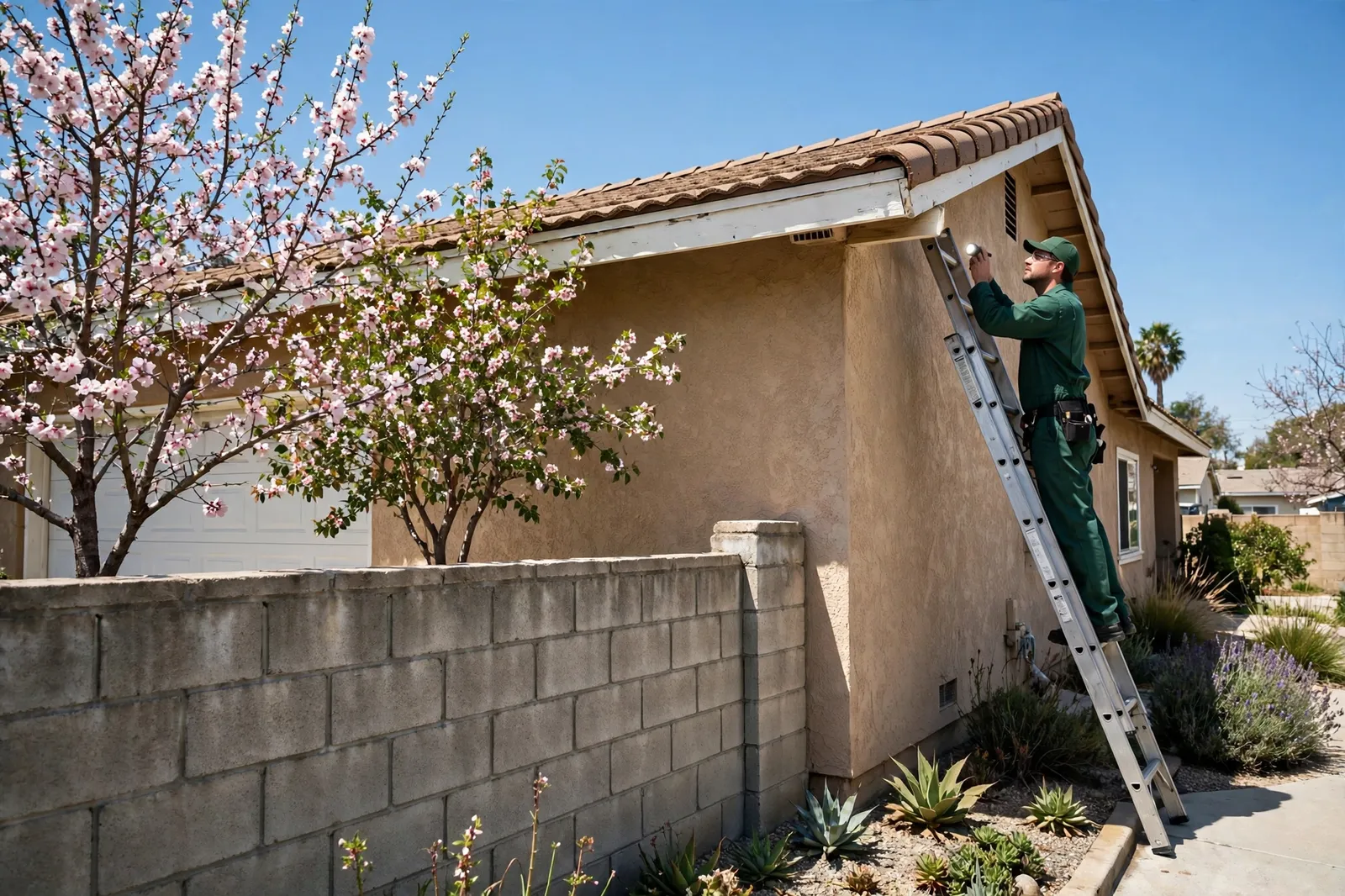
Spring is also when you should walk the outside of the house and look for mud tubes running up the foundation and the block wall, the tell-tale sign of subterranean termites coming up from the soil. Homes near the Los Angeles River corridor and older wood-frame houses in Downtown Paramount and Clearwater North are worth checking first. If you find swarmers or tubes, book a Termite Control and Inspection visit right away. Spring swarm season is the one window of the year when the problem announces itself.
Summer, June to September: Ants, Mosquitoes and Wasps
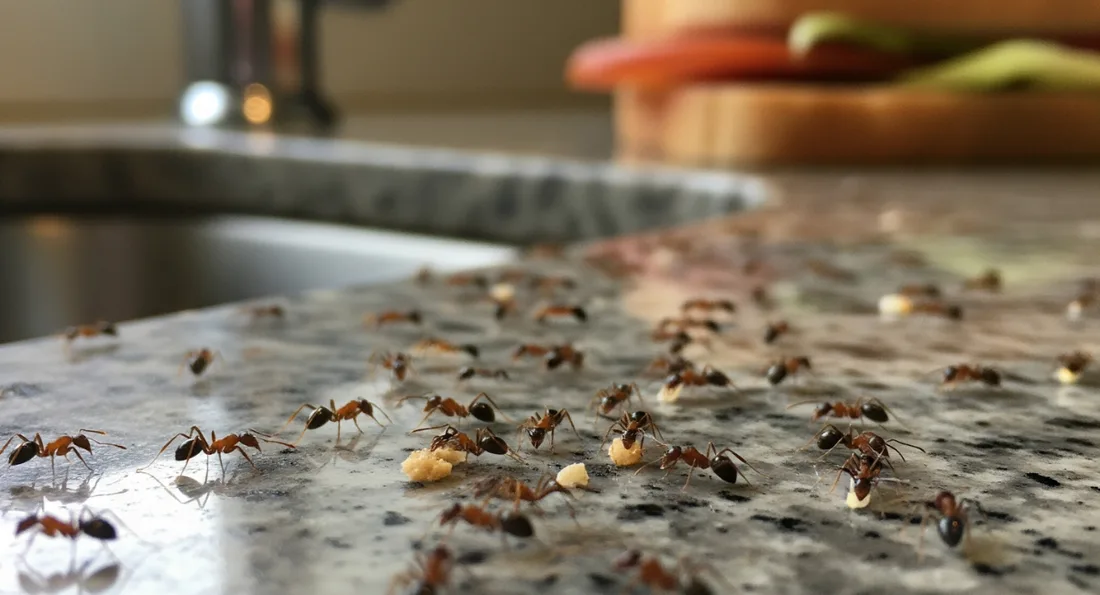
Summer belongs to Argentine ants. The heat pushes them to water, and irrigation keeps the soil along your block wall damp enough for them to nest all summer long. They trail along the wall, through weep holes and under doors, straight into the kitchen. The mistake is reaching for a repellent spray, which splits the colony and sends new trails into the house. Our guide to Argentine ants in Paramount explains why baiting, not spraying, is the fix.
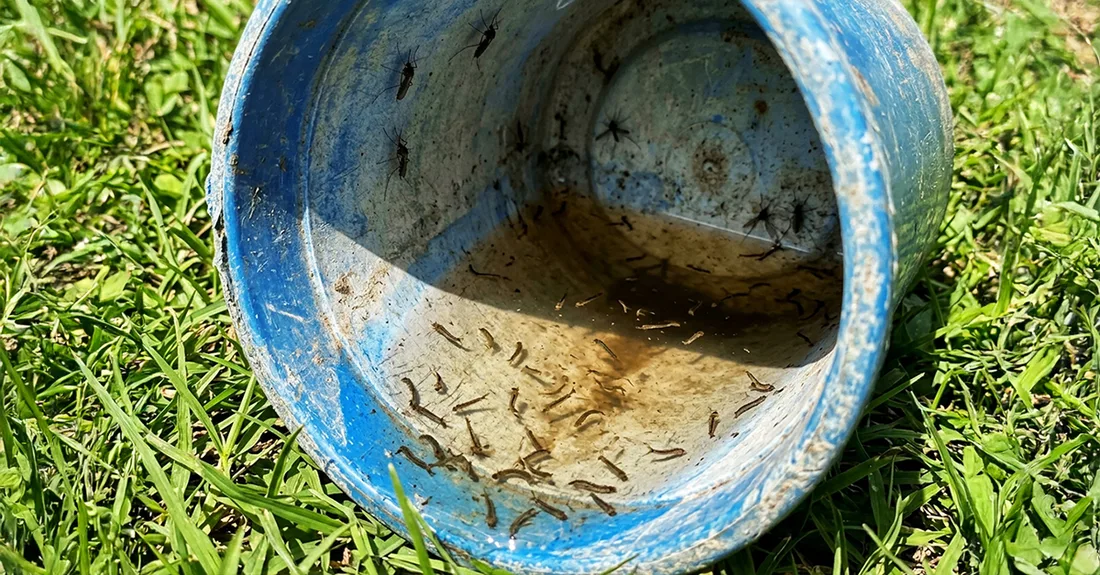
Mosquitoes follow the same pattern. A single summer rain, or a week of heavy irrigation, leaves standing water in saucers, buckets and clogged gutters, and mosquitoes breed in it within days. Our guide to mosquitoes after rain covers the yard check that stops them. Paper wasps join in too, building nests under eaves and in block wall caps through July and August. A small nest found early is a quick job; the same nest in September is a colony.
Fall, October to November: Spiders, Fleas and the First Rodent Push
Fall is black widow season along the block walls. The spiders have spent the summer building up in wall joints, meter boxes and garage corners, and by October the webs and egg sacs are easy to find. Knock webs down weekly, clear clutter off the wall face, and the spiders move on. Fleas peak in fall as well, breeding in the shaded soil under patios and along fence lines where opossums and raccoons pass at night.
Watch for the first rodent signs in November: scratching in the attic at night, droppings near the water heater, a gnawed gap where a pipe enters the wall. Roof rats start looking for winter shelter as the nights cool, and the first ones in are the ones that tell the rest where the entry points are. Seal the gaps now, while the push is still small.
Winter, December to February: Rodents Move Indoors
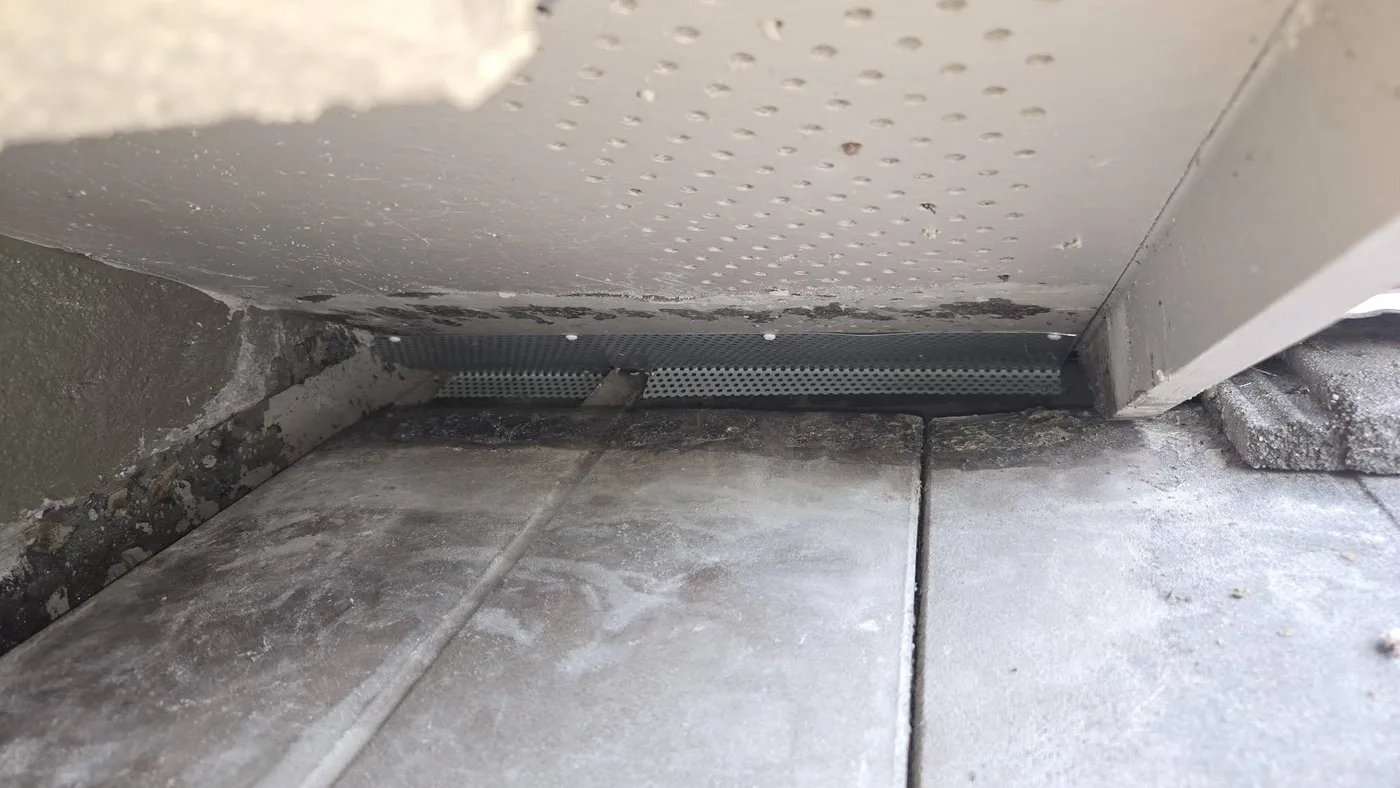
Winter in Paramount is mild, but it is cold enough to drive roof rats and house mice inside. They come in through the roofline, the gaps around vents and the openings where utility lines enter the house, and they settle in the attic, the wall voids and the garage. Park-adjacent homes in Progress Park Area and Hollydale see the most pressure, because the parks and the river corridor hold the rodent population all year.
Winter is the season to listen. Scratching or scampering in the ceiling after dark, a musty smell near the pantry, droppings in the garage: those are the signs. Our Rodent Control program traps, removes and then seals the entry points, because trapping without sealing just makes room for the next rat. And while you are up there, check the attic insulation for nesting material. Rats flatten it into runways, and flattened insulation is often the first visible sign of a long-running problem.
The One Preventive Job Each Season
You do not need a different plan for every pest. You need one job per season, done on time:
- Spring: walk the foundation and block wall for mud tubes and swarmers, and book a termite inspection if anything looks off
- Summer: dump standing water weekly, clear the shaded soil line along fences, and keep ant bait on the trails instead of spray
- Fall: knock down widow webs, vacuum the flea zones in the yard, and seal the pipe and vent gaps before the rodent push
- Winter: listen for attic noise, check the garage for droppings, and seal the roofline gaps the rats are using
Do those four jobs and most Paramount pest problems never get started. If you would rather have it handled on a schedule, our General Pest Control program runs quarterly visits timed to this calendar, so the treatment lands before each season's pest, not after it. Call (562) 539-0161 and we will set up a year of visits around the calendar, starting with whichever season you are in now.
Common Questions
What is the single best month for a general pest treatment in Paramount?
March, just before termite swarm season and the summer ant surge. A spring visit covers the termite check, the first ant baiting and the wasp watch in one trip, and it sets the yard up before mosquitoes and fleas peak.
Do pests really stay active through a Paramount winter?
Most of them, yes. Paramount winters are too mild to stop ants, spiders or roaches outright, and the cool nights actually push roof rats and mice indoors. Winter is the quiet season for mosquitoes and wasps, not for rodents.
Can one visit a year cover the whole calendar?
No. One visit can fix one season's problem, but the pests change every three months. A quarterly program is built for exactly that: four visits a year, each timed to the pest that is about to peak, with a re-service guarantee between visits if anything comes back early.