You open the front door in the morning and a dozen wasps are circling the eave above it. In Paramount, that is a paper wasp nest, and it is one of the most common summer calls we take. The nest itself is not the danger. The danger is what happens when someone decides to deal with it at midday with a can of store spray. Here is how to tell wasps from bees, why timing matters more than the product you use, and when a nest is a genuine emergency.
Paper Wasps vs Bees in Paramount
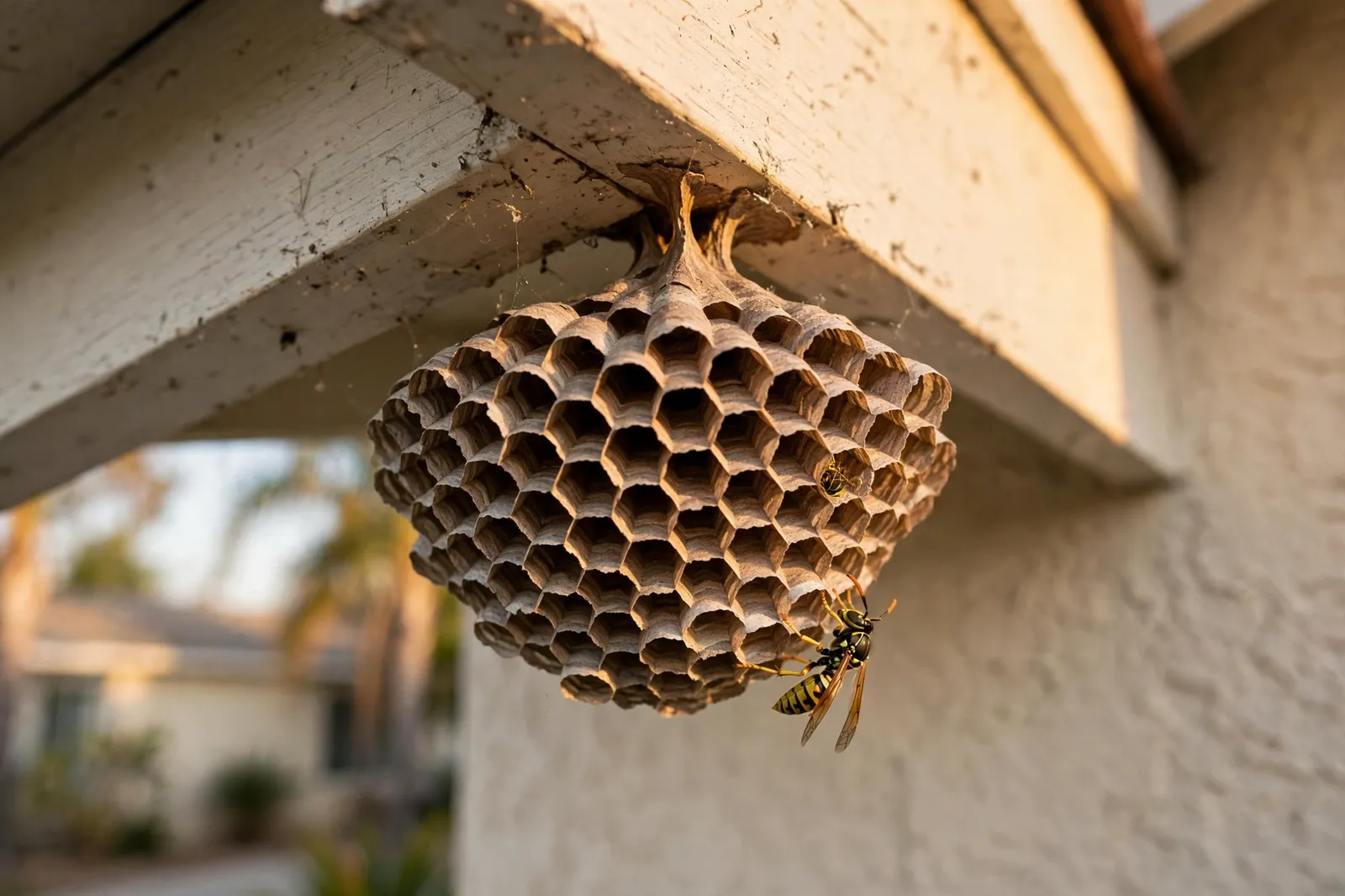
Most Paramount nests belong to paper wasps. Their nest is the grey, umbrella-shaped paper comb you see hanging under eaves, patio covers and porch ceilings, with the open cells visible underneath. A few wasps come and go, and the nest grows through summer. Honeybees are different: they cluster in a dense ball or build wax combs inside a wall void, a meter box or a hollow tree, and you will see hundreds of bees moving in and out of one small opening.
The distinction matters because the response is different. Wasps can be removed. Honeybees in Southern California should be relocated by a beekeeper or a licensed removal specialist whenever possible, not sprayed. If you are not sure which insect you are looking at, take a photo from a safe distance and call. Guessing wrong costs a bee colony or, worse, a wall full of angry wasps.
Where Nests Show Up Around Paramount Homes
Wasps choose the same sheltered spots year after year:
- Under eaves, patio covers and porch ceilings, especially on the shaded side of the house
- Inside the gaps and caps of block walls, where a nest is hidden until the colony is large
- In meter boxes, irrigation valve boxes and barbecue covers that stay closed for months
- Under play equipment, deck furniture and stored ladders in the side yard
- Inside wall voids and attic vents when a small opening goes unnoticed
Homes in Downtown Paramount and Clearwater North with older wood eaves and stucco see nests most often, because the gaps are easier to build in. Walk the outside of your home once in early spring and you will catch nests while they are still the size of a golf ball and easy to deal with.
Why You Should Not Spray a Nest Yourself
- Store sprays rarely reach the queen deep inside the nest, so the colony rebuilds within days
- Wasps release an alarm scent when threatened. Spraying at midday, when the whole colony is active, can send dozens of wasps out at once
- A nest inside a wall void or block wall cannot be reached from outside. Spraying the entrance just drives the wasps deeper, sometimes into the living space
- Wasps remember the spot. A nest knocked down but not removed leaves a scent marker that attracts a new colony next season
- If the nest turns out to be honeybees, a spray kills a protected pollinator colony and leaves honey and wax inside the wall, which attracts roaches and rodents
The Safest Time and Method for Removal
Removal is done in the early morning or late evening, when it is cool and most of the colony is inside the nest and sluggish. A professional suits up, treats the nest directly so the colony is knocked down before it can defend itself, then removes the whole nest rather than leaving it in place. The last step is the one most DIY jobs skip: sealing the gap, vent or wall opening the wasps used, and treating the spot so the scent marker does not draw a new colony back.
That full sequence is how our Wasp and Bee Removal service works. A nest that is removed completely and sealed properly does not come back the next year. A nest that is only sprayed usually does.
When a Nest Is an Emergency
Most nests can wait a day for a scheduled visit. Call right away, day or night, when the nest hangs directly over a door, a walkway or a play area, when someone in the household is allergic to stings, when wasps are getting inside the house, or when a nest is inside a wall void and the buzzing is audible indoors. Those are the situations our Emergency Pest Control (24/7) team handles first.
If you find a nest, keep children and pets inside, do not swat at the wasps, and call (562) 539-0161. Tell us where the nest is and how big it looks, and we will tell you honestly whether it can wait until morning or needs someone tonight.
Common Questions
How do I tell a paper wasp nest from a bee hive?
A paper wasp nest is a grey, papery comb that hangs open under an eave, with the cells visible from below. A bee hive is a dense cluster or wax comb hidden inside a wall, a tree or a box, with hundreds of bees using one small entrance. When in doubt, send us a photo from a safe distance and we will identify it before anyone touches it.
Will the wasps come back to the same spot next year?
They often do, because the old nest leaves a scent marker that attracts a new queen. That is why removal means taking the whole nest down and sealing the gap, not just spraying it. A properly sealed spot rarely gets a second nest.
What should I do if someone gets stung?
Move away from the nest first, then wash the sting with soap and water and apply ice. For a bee sting, scrape the stinger out sideways with a card instead of squeezing it. Watch for signs of allergy such as swelling of the face or lips, trouble breathing or dizziness, and call 911 immediately if any of those appear.