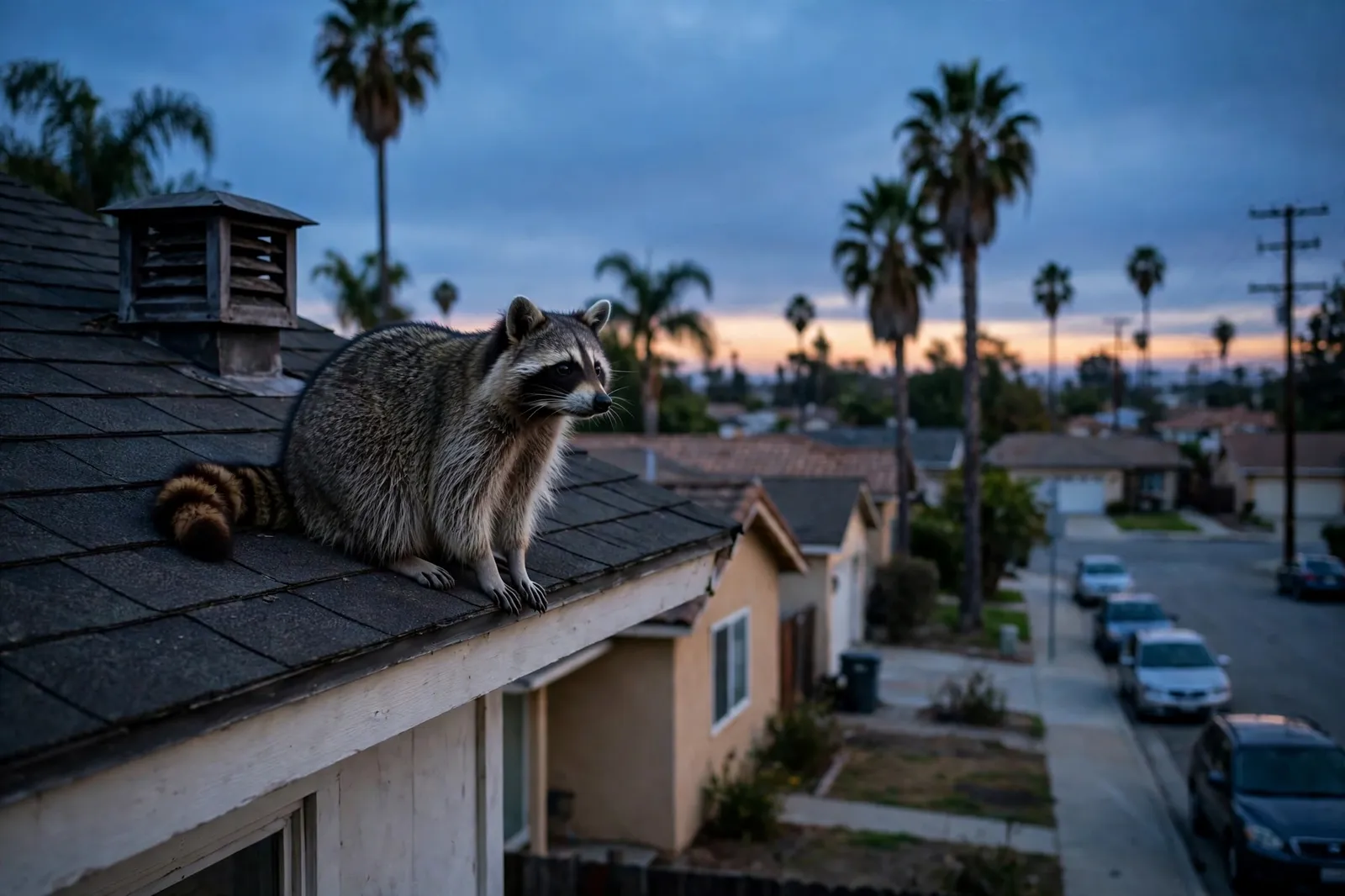
The thump starts just after midnight. Something heavy is walking across the attic, and by morning there is a torn vent screen and insulation scattered on the garage floor. In Paramount, that is almost always a raccoon, an opossum or a roof rat, and each one leaves a different signature. Knowing which animal you have changes everything about how it gets removed. Here is how to tell them apart, what each one does to a house, and how humane removal and exclusion actually works.
The Noises That Tell You Which Animal It Is
Listen before you open the attic hatch. The sound is the best clue you will get:
- Raccoons sound heavy. Slow, deliberate thumps and rolling noises, usually between dusk and 2 a.m., often in one spot where a mother has made a den
- Opossums are quieter and slower. A soft shuffling or dragging sound, sometimes a hiss if cornered, and they tend to stay low in a crawl space rather than high in the attic
- Roof rats are light and fast. Quick scratching and scurrying along beams and inside walls, usually in the hours after dark and again before dawn, often in several spots at once
If the noise is in the walls rather than the ceiling, it is almost certainly rats. Raccoons and opossums are too big to move inside a wall cavity.
What Each Animal Leaves Behind
Each animal damages a home in its own way. Raccoons tear insulation apart to make a nest, rip vent screens and soffits open, and leave latrines, piles of droppings in one corner of the attic, which carry roundworm eggs and should never be cleaned without protection. Opossums leave scattered droppings and a strong musky smell, and they die in awkward places, which is a smell you will not forget. Roof rats gnaw wiring, plastic pipes and ductwork, and leave small dark droppings along beams and in the insulation.
Gnawed wiring is the quiet emergency in all of this. A rat-chewed wire in an attic is a fire risk, and it is the first thing a good inspection checks. If you hear scratching and your lights have started flickering, do not wait.
Why Paramount Homes Are Easy Targets
Paramount sits along the Los Angeles River corridor, and the river, the parks and the alleys give wildlife a highway straight into residential streets. Homes near Progress Park and in Hollydale see the most activity, because the animals den in the park trees by day and forage in the neighbourhoods at night. Palm trees are the other half of the problem: a palm frond touching a roof is a bridge, and raccoons and roof rats use it every night.
Fruit trees, pet food left out overnight, open trash bins and bird feeders finish the invitation. A raccoon that finds food on your patio once will check back every night for a month. The animals are not passing through by accident. They are working a route, and your house is on it.
Humane Trapping and Exclusion, Step by Step
Real wildlife work is not setting a trap and hoping. It runs in a fixed order:
- Inspection. We find every entry point, the den location, and the species, from the tracks, droppings and damage. A raccoon hole and a rat hole get very different treatment
- Removal. Live traps for raccoons and opossums, and one-way exit doors that let animals leave and not return. California rules limit how far wildlife can be relocated, so exclusion is often the legal and practical answer rather than a long drive
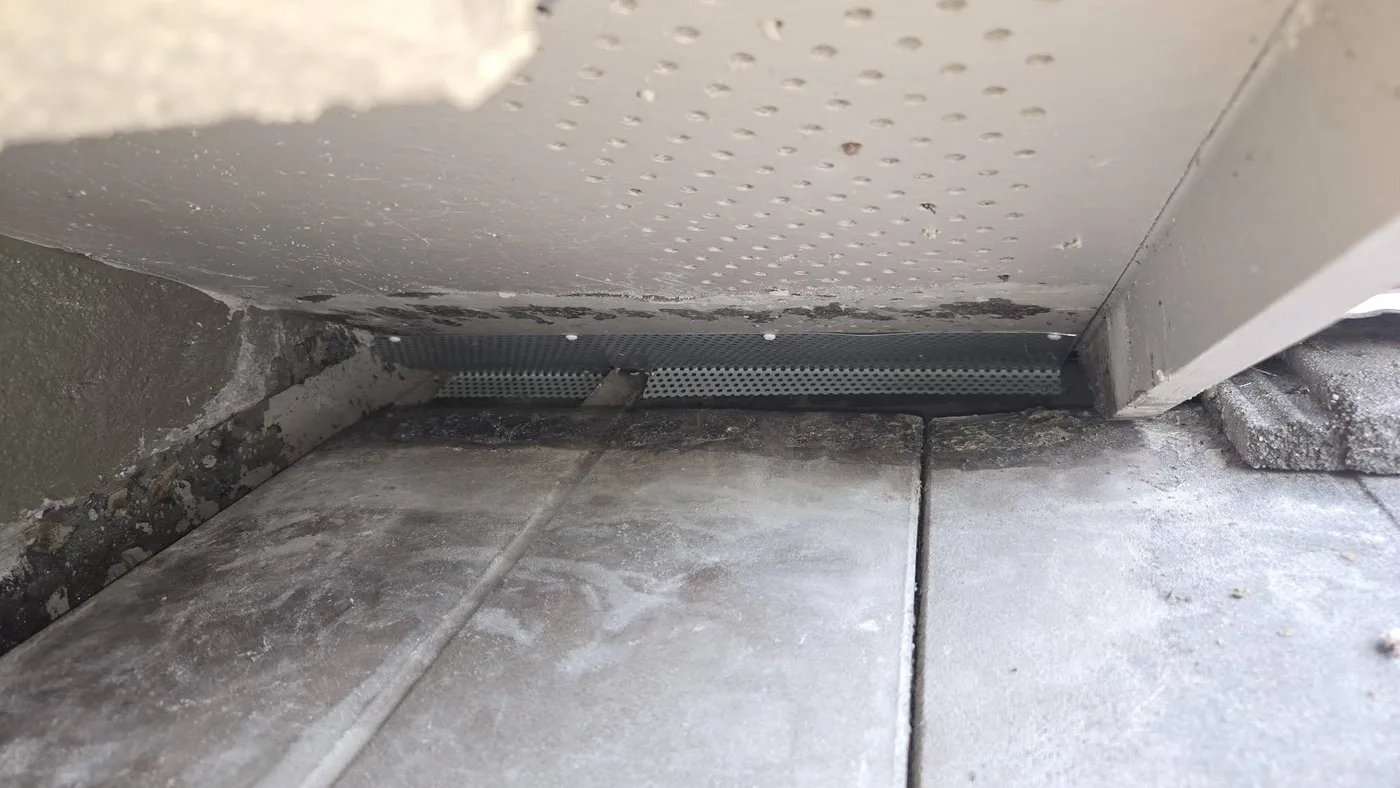
- Sealing. Every entry point is closed with steel mesh, metal flashing or mortar, not foam or wood, which raccoons and rats chew through in a night
- Clean-up. Contaminated insulation is removed, latrines are disinfected, and damaged vents are repaired so the attic is safe to use again
That sequence is the core of our Wildlife Removal service, and the Rodent Control program covers the roof rat side, including the follow-up visits that confirm the animals are actually gone and not just quiet for a week.
Keeping Them Out for Good
- Trim palm fronds and tree branches so nothing touches the roof. Six feet of clearance is the rule
- Bring pet food in at night and use trash bins with locking lids
- Screen attic vents, roof vents and crawl space openings with steel mesh, and check them every spring
- Pick fallen fruit off the ground instead of leaving it for the night shift
- Walk the roofline once a year. A gap the size of a golf ball is enough for a roof rat, and a raccoon only needs a hole the size of its head
If something is already in the attic, do not block the hole yourself first. A trapped raccoon will tear a new hole through your roof to get out, and a trapped rat will die in the wall. Call (562) 539-0161 and we will get the animal out first, then seal the house properly.
Common Questions
Is it legal to trap and relocate raccoons in California?
California restricts how far trapped wildlife can be relocated, and in many cases relocation is not permitted at all. That is why licensed professionals usually use live traps combined with exclusion, one-way doors that let the animal leave on its own and sealing so it cannot return. A homeowner trapping a raccoon without a permit can face a fine, so this is not a DIY job.
How much damage can a raccoon do in an attic?
A lot, and fast. One raccoon can flatten and foul a whole section of insulation in a week, tear ductwork open, rip vent screens off, and leave a latrine that contaminates the space. The repair bill is usually several times the cost of the removal itself, which is why early calls save real money.
What should I do if I find a baby opossum or raccoon?
Do not pick it up with bare hands. Keep children and pets away, and call a professional the same day. A mother opossum often returns for a baby that fell off her back, and a baby raccoon usually means the mother is denning nearby. We will check whether the mother is present before deciding on the next step.